Seattle Floating Home Market Report for 2026 So Far
Seattle’s floating homes market has always operated differently from the traditional residential market. With a limited number of floating homes, widely varying ownership and moorage arrangements, and properties ranging from tiny historic cottages to multimillion-dollar architectural residences, averages only tell part of the story. Still, the August 2026 numbers give us a fascinating look at where the market stands today.
18 Floating Homes Are Currently for Sale
As of August 10, there are 18 active floating-home listings included in this market report. Asking prices range from $550,000 to $4,999,000, with a median asking price of $1,525,000. The average active listing price is approximately $2.24 million, although that number is pulled upward considerably by the luxury end of the market.The range of available homes is remarkable.
At the entry level, there is a 500-square-foot Eastlake floating home offered at $550,000 and an 800-square-foot Portage Bay home offered at $899,000. From there, buyers have numerous choices between roughly $1.1 million and $1.6 million before the market makes a substantial jump into the $3 million-plus category. That makes the current market particularly interesting because buyers aren't simply choosing between floating homes. They are choosing between dramatically different versions of floating-home ownership.
Buyers Have More Choices
One of the most important numbers in this report isn't a price. It's the relationship between active and pending inventory. There are currently 18 active listings but only 2 pending sales. The two pending homes are listed at $799,000 and $2,099,000, with a median pending list price of $1,449,000. For buyers, increased selection can be a wonderful thing. Floating-home buyers sometimes spend months or even years waiting for the right combination of location, dock, view, outdoor space, parking, moorage and architecture to become available. Right now, there is considerably more to choose from. For sellers, increased inventory means buyers don't necessarily feel the same urgency they might feel when only a handful of floating homes are available.
Days on Market Are Worth Watching
The 18 active listings are averaging 78 cumulative days on market. Several have already been available for approximately three months or longer, while others are relatively new to the market. That doesn't necessarily mean there is anything wrong with a floating home that takes longer to sell. Floating homes have an unusually specific buyer pool. A buyer may love a particular house but need parking. Another may require owned moorage. Someone else may need a boat slip, financing that works with the property's ownership structure, or a particular location for commuting. The right buyer and the right floating home have to find each other. But longer market times combined with relatively high inventory suggest that buyers can afford to be more deliberate right now.
Price Reductions Are Part of the Market
We're also seeing sellers adjust to current conditions. One of the more dramatic examples in the report is a floating home originally offered at $2.4 million that is now listed at $1.5 million. Another property originally priced at $3.65 million is now offered at $2.995 million. A Portage Bay property that began at just under $1.3 million is now $1.175 million. Those aren't insignificant adjustments. They illustrate why original asking price and eventual market value shouldn't be confused with one another. Ultimately, the market determines what buyers are willing to pay. For today's sellers, getting the initial positioning right may be particularly important because buyers can compare a property against many more floating homes than they could in a low-inventory environment.
What Are Floating Homes Actually Selling For?
My report includes 11 closed floating-home sales as found through the NWMLS and compiled by me. Those sales range from $320,000 to $3.24 million, with a median sold price of approximately $1.88 million. The average sale price was approximately $1.83 million. Perhaps more revealing is the relationship between asking prices and closing prices. On average, the sold properties closed at approximately 96.6% of their final list price. However, they averaged only 92.8% of their original asking prices. That difference tells an important story. Once sellers get close to a price buyers perceive as market value, transactions are happening reasonably close to asking price. But in some cases, it has taken price adjustments to get there.
Some Homes Are Still Selling Very Quickly
A slower overall market doesn't mean every floating home takes months to sell. One recent Eastlake sale spent just 3 cumulative days on market and sold for its full $2.38 million list price. That is an important reminder that averages aren't destiny. Exceptional properties that are appropriately positioned can still attract buyers quickly. At the same time, the 11 sold properties averaged 126 cumulative days on market, demonstrating just how widely marketing times can vary in this category.
There Really Isn't One "Floating Home Market"
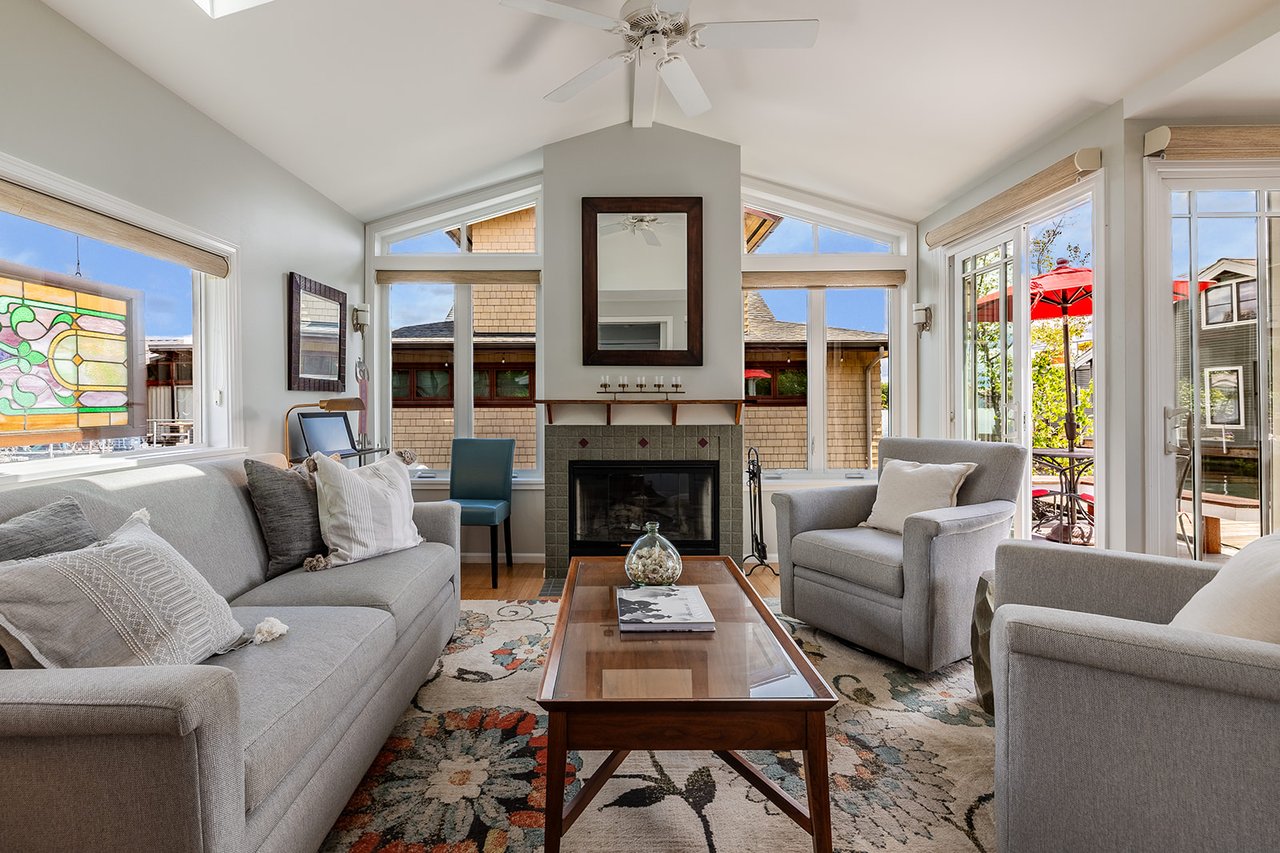
Perhaps the biggest takeaway from the August numbers is that talking about the Seattle floating-home market as though it were one uniform category can be misleading. A $550,000, 500-square-foot floating cottage and a nearly $5 million floating residence may both technically be floating homes, but they aren't necessarily competing for the same buyer. Eastlake, Portage Bay, Westlake and other Lake Union locations also offer very different experiences. Then there are differences in parking, boat moorage, dock configuration, monthly costs, ownership structure, outdoor space, views, condition and financing. Even two floating homes located a few docks apart can have very different values. That is one of the reasons price per square foot is interesting but should never be the sole measure of floating-home value. The water, the dock, the community and the lifestyle are all part of what someone is buying.
What This Means for Buyers and Sellers
For buyers, this may be one of the more interesting floating-home markets we've seen in some time. Eighteen active listings means there is an opportunity to compare properties rather than feeling compelled to jump at the first suitable home that reaches the market. Buyers can take a closer look at location, dock, ownership structure, moorage, monthly expenses and condition and decide which combination actually works for the way they want to live. For sellers, the message is different. More inventory means presentation, pricing, positioning and individual attention become increasingly important. Buyers can see what else their money will purchase, and listings that miss the market initially may need additional time or price adjustments to find their buyer. But none of this suggests that demand for Seattle floating homes has disappeared.
Eleven closed sales demonstrate that transactions are happening, including sales well into the multimillion-dollar range. And properties that hit the right combination of price, location and desirability can still move extraordinarily quickly. The August 2026 market looks less like a declining market and more like a selective market. Buyers have choices. Sellers have competition. And the homes that stand out, whether because of price, architecture, location, moorage, condition, history or something impossible to reproduce, still have the ability to command attention.
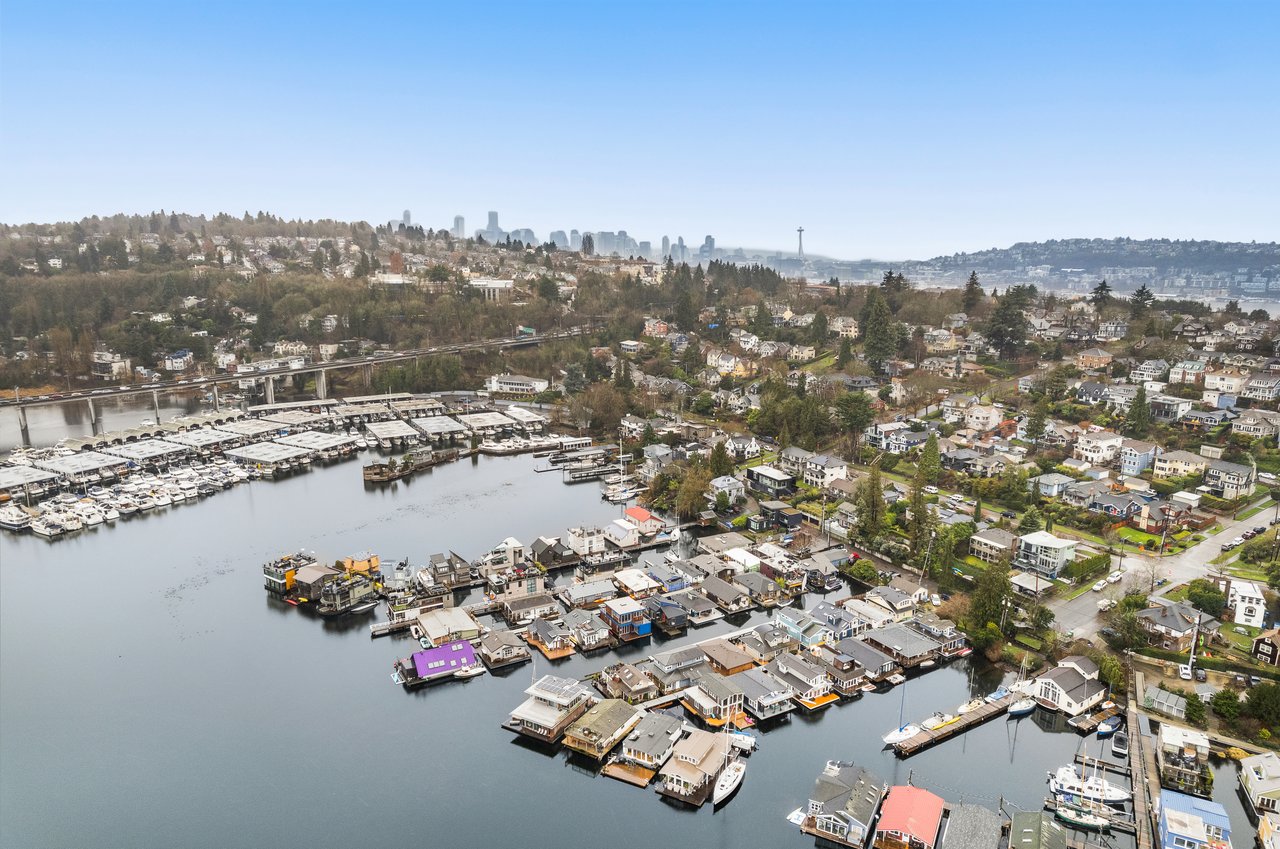
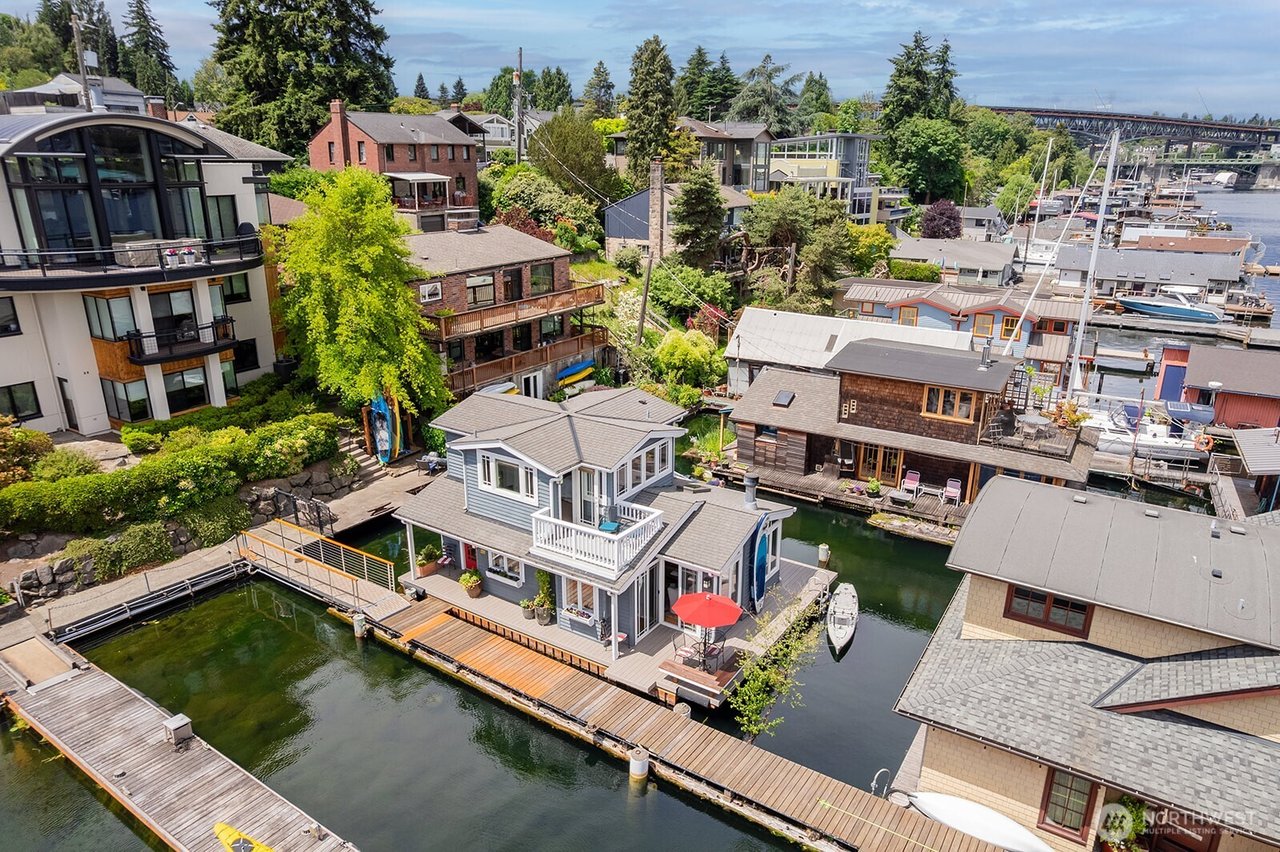
That's the thing about Seattle floating homes. There may be more of them for sale today than we're accustomed to seeing, but there will never be an unlimited supply of homes where you can open your front door, step onto your deck and have Lake Union waiting for you. I have one in particular which I must end this with and recommend because it is a truly magnificent and affordable home. 1210 E Shelby St #G has has parking and a view and is $1,575,000.
A Personal Perspective on Floating Home Representation
I have been selling homes for more than 26 years, and during that time I have had the privilege of mentoring other real estate agents as they built their own businesses. Floating homes, however, have always been a particularly personal part of my real estate career because I own on the lake myself. I understand this market not only as a broker, but as an owner who knows firsthand what it means to live with docks, floats, moorage, inspections, financing, insurance and all of the wonderfully unusual details that come with life on the water. I am also intentionally selective about the floating-home listings I take. I consider them on a case-by-case basis because I want to have the time and capacity to give each seller and each home individual attention. Just as importantly, I don't want to build an inventory of similar listings that leaves my own sellers competing against one another for the same buyers and the same marketing resources. My goal isn't to have the most floating-home listings on the market. It is to make sure that when I agree to represent one, I have the time, knowledge and commitment to truly represent it. Please feel free to reach out if you are interested in buying or selling with me and receiving individual attention. [email protected] 206-850-8841